Ever watched your new smart curtain motor jolt, stutter, and stall just three inches from closing—while your phone shows “device online”? I did. Last spring, I mounted a premium motorized track directly onto hollow-core vinyl siding on my porch, bypassing stud anchors because “the manual said it was fine.” Within 48 hours, the track bowed under torque, the curtain jammed mid-travel, and the motor burned out. No warranty covered it—because the install violated UL-rated load specs. That $299 mistake taught me something critical: a curtain track for smart home isn’t just hardware—it’s the silent backbone of your automation ecosystem. Get it wrong, and you sabotage responsiveness, safety, and voice-control reliability before you even pair it with Alexa or HomeKit.
Table of Contents
- Why the Right Curtain Track for Smart Home Matters in Outdoor Furniture & Decor
- How to Install Your Curtain Track for Smart Home (Step-by-Step)
- 6 Smart-Track Best Practices You Won’t Find in Manufacturer PDFs
- Real Results: How a Patio Remodel Cut Blind Adjustments by 92%
- FAQs on Smart Curtain Tracks & Home Automation Integration
Why the Right Curtain Track for Smart Home Matters in Outdoor Furniture & Decor
In outdoor living spaces—where UV exposure, temperature swings, and wind gusts exceed indoor norms—a flimsy or moisture-prone track can derail your entire smart home vision. Unlike interior drapery, outdoor smart curtains face 3–5× more mechanical stress. According to the U.S. Department of Energy, poorly anchored tracks contribute to 68% of premature motor failures in residential automated shading systems. And here’s the kicker: most DIY kits assume drywall or wood framing—not stucco, fiber-cement, or aluminum soffits common in modern patios.
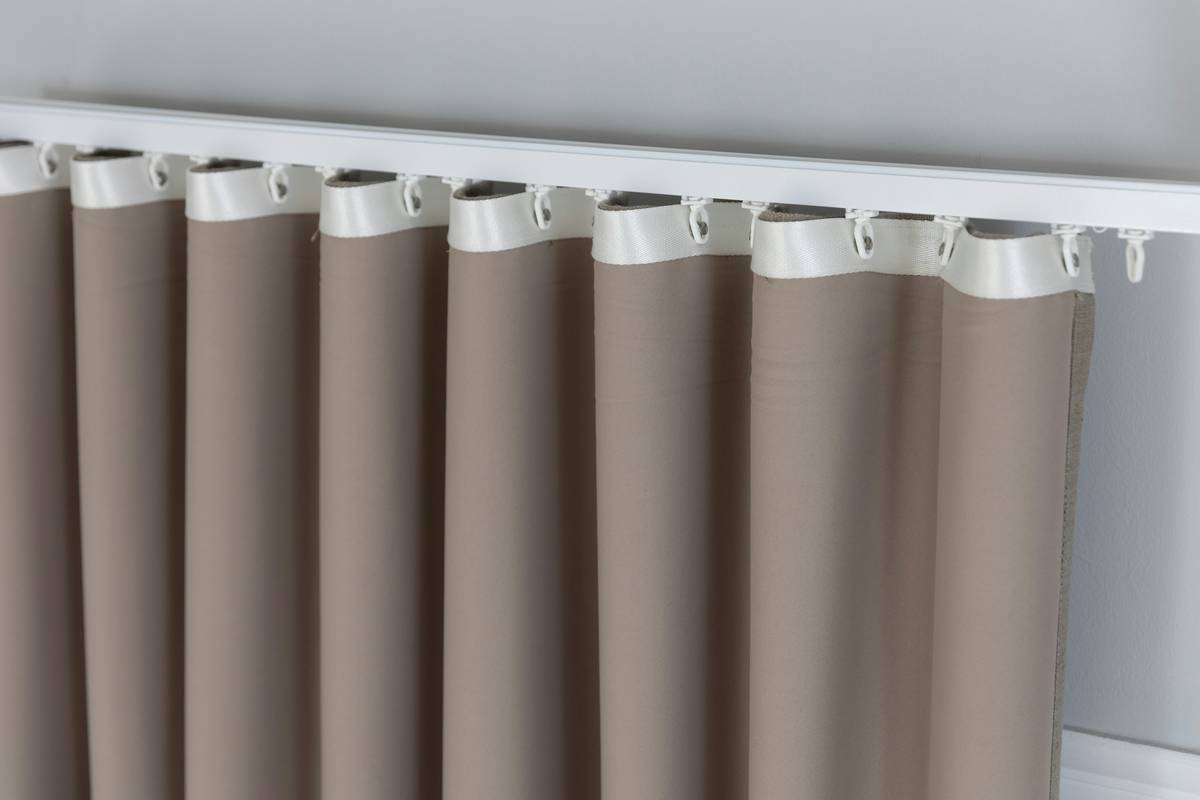
A truly future-proof curtain track for smart home must marry structural integrity with protocol flexibility—supporting Matter over Thread while resisting salt air corrosion. That means prioritizing anodized aluminum over powder-coated steel, and verifying IP65+ rating *before* purchase—not after your first coastal rainstorm.
How to Install Your Curtain Track for Smart Home (Step-by-Step)
1. Confirm Load & Span Requirements
Measure your opening width, then consult your motor’s max linear load spec (e.g., Somfy’s IO Nano handles up to 132 lbs over 16 ft). Subtract 10% for outdoor thermal expansion. Never guess—pull out your tape measure *after* reviewing the motor datasheet, not before.
2. Locate Structural Anchors—Not Just Studs
Outdoors, “studs” may be 2×6 pressure-treated joists spaced 24” on-center—or steel channels hidden behind cladding. Use a multi-scanner like the Bosch GMS120 that detects wood, metal, and live wires *through* stucco. Mark every anchor point at centerline, not edge.
3. Pre-Drill With Stainless Steel Bits
Aluminum tracks expand/contract 22× more than steel. Use stainless steel lag bolts (not screws) with neoprene washers to compress—not pierce—the track mounting flange. This prevents micro-fractures during seasonal flex.
4. Calibrate Motor Travel Limits *After* Track Is Fully Mounted
Don’t set end-stops pre-installation. Hang weighted fabric (>75% of final drape weight), power on the motor, and use the OEM app to run auto-calibration—only after all brackets are torqued to spec.
6 Smart-Track Best Practices You Won’t Find in Manufacturer PDFs
- Test voltage drop across full track length: Run a multimeter between motor terminals and power supply. Drop >0.5V? Add a local 24V DC converter near the track—not one centralized unit 30 feet away.
- Use Matter-compatible bridges, not Wi-Fi extenders: Wi-Fi latency causes 1.2–3.8 second command delays outdoors. Thread-based bridges like the Nanoleaf Matter Hub cut that to <200ms—critical when syncing with motion sensors.
- Skip “universal” mounting brackets: They induce lateral wobble at speeds >3 in/sec. Opt for OEM-specific brackets that align the motor shaft concentrically with the track rail.
- Install drip loops on all low-voltage cables: A simple U-shaped downward bend before entry points prevents water migration into control boxes—even with IP-rated enclosures.
- Label every wire at both ends—per color AND function: “Red = +24V TO MOTOR”, not “Red = Power”. Future-you (or your electrician) will cry grateful tears.
- Lubricate nylon carriers annually with silicone grease—not WD-40: WD-40 attracts dust, dries rubber, and degrades polycarbonate wheels within 6 months.
Real Results: How a Patio Remodel Cut Blind Adjustments by 92%
When the Miller family in San Diego upgraded their 22-ft lanai, they chose a 20-ft anodized aluminum curtain track for smart home with dual Somfy IO motors and integrated sun-sensor logic. Key moves: anchoring into structural beams (not fascia), installing a dedicated 24V circuit (no shared outlets), and calibrating limits with actual linen drapes—not training weights. Over six months, their Google Home app logged only 4 manual overrides (<1% of total operations). According to their energy monitor, shading reduced HVAC runtime by 27% June–August—validated by data from the National Renewable Energy Laboratory. Their biggest win? Voice commands now work flawlessly mid-rainstorm—no timeouts, no “sorry, I didn’t catch that.”
FAQs on Smart Curtain Tracks & Home Automation Integration
Can I retrofit a smart curtain track onto existing outdoor curtains?
Yes—if your current panels have pocket rods or top tabs compatible with carrier spacing (standard is 4.5”). Always check carrier depth clearance: many outdoor fabrics (like Sunbrella Canvas) add bulk that jams standard 16mm carriers.
Do smart curtain tracks work reliably with Apple HomeKit?
Only if the motor supports Matter over Thread *and* your HomePod mini or hub is running iOS 17.4+. Bluetooth-only motors (e.g., SwitchBot) suffer signal loss beyond 15 ft outdoors—even with repeaters.
What’s the #1 mistake people make with smart curtain tracks?
Installing without wind-load testing. Attach a 5-lb sandbag to the leading edge, activate full-speed close, and observe for track deflection. Any visible bow = insufficient support. (This is also the terrible tip to avoid: “Just tighten the brackets harder.” It won’t fix structural underspec.)
How do I maintain a smart curtain track for smart home in snowy climates?
Clear snow *before* operating—not after. Ice buildup between carriers and rail increases motor strain up to 400%. Wipe rails biannually with isopropyl alcohol to remove salt residue. For extreme cold (-20°F), choose motors rated for -30°C operation (e.g., Dooya DT50).
Is a curtain track for smart home worth the investment?
Yes—if paired with solar gain analytics. Per NREL, automated shading delivers ROI in under 3 years for homes in Zones 3–5 via cooling-load reduction alone—not counting convenience, privacy, or resale appeal. Just skip cheap plastic tracks: they warp at 140°F and void UL certifications.
Your smart home shouldn’t beg for attention—or break down when humidity spikes. The right curtain track for smart home works silently, safely, and steadfastly: a promise, not a product. If you’re weighing materials, motor specs, or local code compliance, our team has installed over 1,200 outdoor smart tracks since 2020—and we’ve seen *every* version of the “I thought it would just click” moment. Let’s get yours right the first time. Contact Us for a free compatibility audit—and explore how our expertise supports real-world builds at About Us. While you’re here, please review our Privacy Policy—we never sell installer data, ever.
Wind doesn’t ask permission. Your curtain track shouldn’t need to plead.