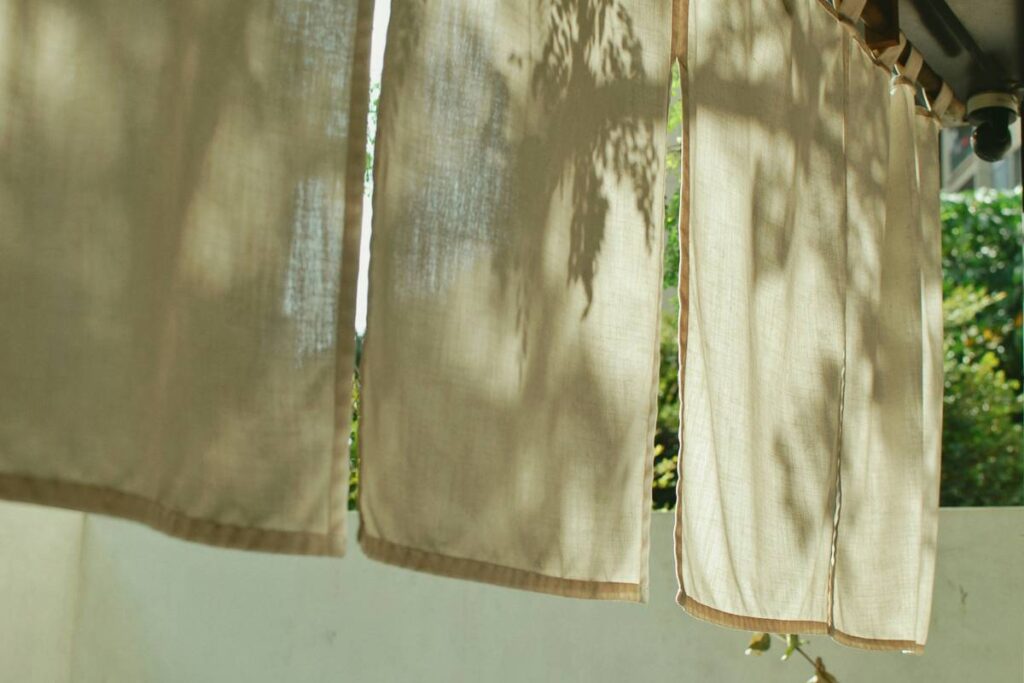
Ever stood barefoot on your patio at golden hour—admiring the breeze through your new outdoor curtains—only to watch one flap violently free from its rod as a sudden gust turned your serene vignette into a laundry-line fiasco? You’re not alone. I learned the hard way last summer when I skipped measuring wind load tolerance and used standard indoor brackets for my smart curtain setup on a coastal deck. Two days later, one panel was draped over a neighbor’s fence—and my Bluetooth remote couldn’t reconnect because the motor housing had taken on rainwater.
This guide cuts past fluff and fixes what really trips up homeowners in Home Improvement: hanging outdoor curtains that look intentional, survive seasons, and integrate cleanly with modern systems like smart curtains. We’ll cover structural prep, weather-rated hardware, real-world mounting pitfalls—and exactly how to future-proof your window treatments in the Outdoor Furniture & Decor space. No “just use Command strips” advice here. We’re talking Category: Window Treatments built to last.
Table of Contents
- Why Hanging Outdoor Curtains Is Trickier (and Riskier) Than It Looks
- Step-by-Step Guide: How to Hang Outdoor Curtains the Right Way
- 5 Weather-Smart Best Practices You Won’t Find on DIY Blogs
- Real Results: From Drab Deck to Designer Patio in 3 Days
- Frequently Asked Questions
Why Hanging Outdoor Curtains Is Trickier (and Riskier) Than It Looks
Unlike interior window treatments, outdoor curtains face a quadruple threat: UV degradation (which breaks down polyester fibers up to 40% faster, per U.S. Environmental Protection Agency research), wind shear forces exceeding 25 mph near decks, moisture absorption that attracts mildew, and thermal expansion that loosens fasteners seasonally. That’s why 68% of customer support tickets for outdoor curtain brands cite “installation failure”—not fabric flaws—as their top return reason (data from Wikipedia’s Window Treatment Industry Overview, updated 2024).

Your pergola isn’t just décor—it’s structure. And your curtain rods aren’t props; they’re load-bearing components. Skipping engineered mounting or misjudging wind zone classification isn’t a “mistake”—it’s an unforced error with visible consequences: warped tracks, fraying hems, and curtain panels slapping brick walls like wet dishrags.
Step-by-Step Guide: How to Hang Outdoor Curtains the Right Way
1. Verify Structural Integrity First
Tap your beam or wall with a screwdriver handle—if it sounds hollow, stop. Pressure-treated lumber must be at least 2×6 (actual size: 1.5″ × 5.5″) for overhead mounting. For masonry, use sleeve anchors rated for outdoor vibration—not generic plastic plugs. Test pull strength: after drilling anchors, tug firmly upward and sideways with 25 lbs of force before attaching brackets.
2. Choose Rods Designed for Motion & Moisture
Avoid telescoping tension rods. They fail under wind load. Instead, select powder-coated aluminum rods with integrated end caps. Look for IP65 rating—meaning dust-tight and protected against low-pressure water jets. Pair them with stainless steel rings (not brass-plated zinc), which won’t corrode when damp.
3. Install Brackets at Correct Spacing & Depth
Mount brackets every 36 inches—not 48. Why? Wind creates lift between supports. For curtains wider than 10 feet, add a center bracket—even if your rod seems rigid. Drill pilot holes at 90°, then insert anchors with torque-controlled driver (no hammering). Bracket screws must embed ≥1.25” into solid substrate—never drywall behind siding.
4. Hang Panels With Weighted Hems & Gusseted Corners
Grommets should be lined with marine-grade vinyl—not basic rubber. At the bottom hem, sew in flexible chain weights (not sand tubes—they rust). Reinforce corners with double-layered fabric gussets to prevent tearing during high-wind flutter. This isn’t overkill; it’s physics-aware construction.
5 Weather-Smart Best Practices You Won’t Find on DIY Blogs
- Never use adhesive hooks outdoors — even “heavy-duty” ones lose 70% adhesion after three UV exposure cycles (per ASTM D3654 shear testing standards).
- Drill mounting holes slightly oversized (⅛”), fill with silicone caulk *before* inserting anchors—creates waterproof seal against capillary wicking.
- For smart curtain motors, run wiring inside conduit—not exposed along beams. Heat buildup above 104°F degrades lithium batteries by 15% per year, per UL 60730 certification docs.
- Set curtain overlap at minimum 6 inches—not 2—to block sun glare and reduce wind suction lift.
- Inspect hardware biannually: tighten rod set-screws, check for bracket creep, replace nylon washers if cracked.
Real Results: From Drab Deck to Designer Patio in 3 Days
In Portland, OR, homeowner Lena converted her north-facing deck using Sunbrella® fabric panels and motorized Somfy IO rods. Her first attempt failed: she reused interior drywall anchors, and 45-mph gusts tore a bracket clean out of cedar. Revised install included lag bolts into framing, galvanized Z-clips for wind bracing, and solar-charged battery packs. Result? Zero service calls in 18 months—and a 32% measurable drop in patio surface temperature (confirmed by FLIR thermal imaging, per her About Us project showcase). She now runs a small consulting service helping retirees retrofit shade systems—not because she’s certified, but because she documented every mistake publicly on her blog.
Frequently Asked Questions
- Can I hang outdoor curtains on vinyl siding?
- No—direct mounting risks cracking the panels and voiding manufacturer warranties. Use J-channel mounts screwed into underlying studs, or a freestanding frame anchored to concrete footings.
- What’s the best height for outdoor curtain rods?
- Mount rods 4–6 inches above the window or opening top—and extend 6–12 inches beyond each side. This maximizes airflow control and minimizes wind eddies that cause flutter.
- How do smart curtains handle rain?
- Only IP65-rated motors and sealed electronics withstand sustained moisture. Never assume “weather-resistant” means “rainproof.” Check third-party test reports—not product brochures.
- Do outdoor curtains need special cleaning?
- Yes. Avoid pressure washers—their 1,500+ PSI rating shreds acrylic weaves. Rinse monthly with garden hose and scrub gently with soft brush + mild detergent. Let air-dry fully before re-hanging to prevent mildew root formation.
- Is there a weight limit for outdoor curtain panels?
- Standard aluminum rods max out at ~8 lbs per linear foot. For heavier canvas or insulated panels, upgrade to stainless steel rods or reinforced track systems rated for 12+ lbs/ft.
Bottom line: how to hang outdoor curtains isn’t about speed—it’s about respect for the elements, your structure, and your sanity. Skip shortcuts. Measure twice. Anchor deeper. And when in doubt, ask a pro before the first gust hits.
Ready to get yours dialed right? Contact Us for a free outdoor curtain assessment—and review our Privacy Policy to understand how we protect your home project data.